

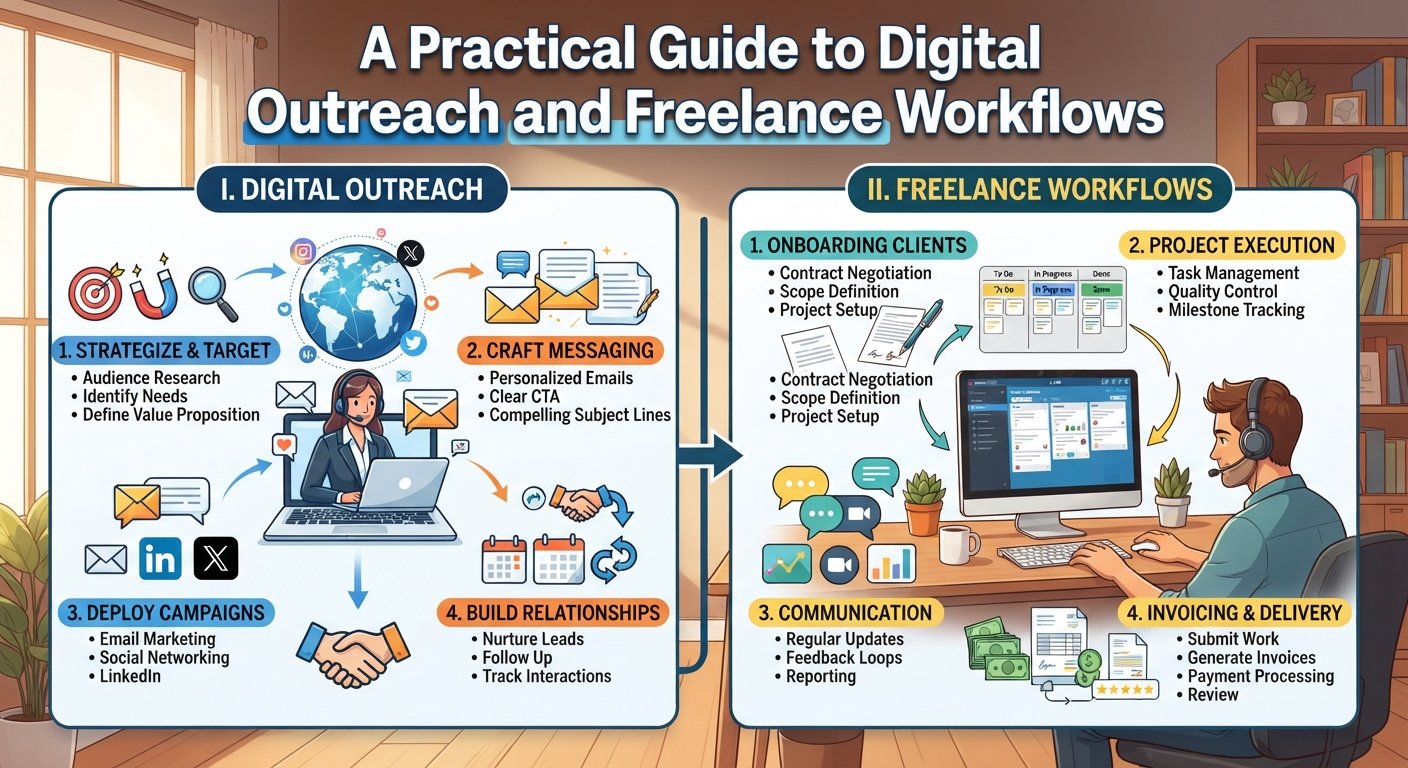
Growing an online business takes more than a useful product or a well-designed website. Retailers and small teams also need to reach the right audiences, publish content that answers real questions, and find people who can complete specialized work without creating unnecessary delays. These tasks are connected: a strong outreach plan depends on good writing, reliable research, and clear project coordination. Treating each as a separate decision makes it easier to spend time and budget where they can have a practical effect.
Begin With the Audience
Before planning a campaign, identify who you want to reach and what they need to know. A retailer might be trying to help first-time buyers compare product options, while a software company may need to explain setup or compatibility. The more specific the reader’s question, the easier it is to choose a useful format and a suitable place to publish it.
Audience definition also helps prevent a common outreach mistake: choosing a publication solely because it has a large audience or impressive-looking metrics. A smaller site with readers who care about your subject may be more valuable than a general publication where the topic feels out of place. Read recent articles, note the site’s tone and depth, and consider whether your idea would make sense to its regular readers.
Make Guest Content Useful
A guest article should provide value independently of any business mention or link. It might explain how to compare delivery policies, what to check before buying refurbished electronics, or how to choose a product for a particular use case. Clear advice and specific examples give readers a reason to finish the piece and help the host publication maintain its editorial standards.
Retailers and product brands researching publication options can use a shopping-site directory as an initial way to find blogs and websites covering online shopping and retail. A listing is a research lead, not a guarantee that a placement is suitable. Review each publication directly: check whether its recent content is relevant, whether the article format fits your idea, and whether the audience appears to be the one you intend to reach.
When preparing a pitch, describe the reader problem first. A proposal such as “how to choose a durable laptop bag for commuting” gives an editor a clearer idea of its use than a broad promise to discuss a brand’s latest products. If a link is appropriate, place it where it expands on the point being made. Avoid forcing a commercial phrase into a sentence where it does not belong.
Keep Quality and Measurement in View
Publishing more articles is not automatically a sign of progress. A few well-researched contributions on relevant sites can be more useful than a large number of generic posts. Before publishing, verify factual claims, check that examples are current, and make sure the article is original. Read it from the perspective of someone with no prior knowledge of your company: does it answer a question, or mainly describe a service?
Set a realistic way to judge results. Referral visits, inquiries, newsletter subscriptions, and reader engagement can indicate whether a placement reached people who care about the subject. Search visibility may also matter, but it should not be the only measure. Keep records of publication dates and revisit older content when products, policies, or advice change. This makes outreach a maintained part of the business rather than a one-time task.
Plan the Work Behind the Campaign
Content outreach often involves several kinds of work: researching publications, drafting and editing articles, designing graphics, and managing campaign data. A small business may have the expertise to decide what should be said but not enough in-house time to carry out every task. Outsourcing can help, provided the brief is clear and the work is divided into manageable deliverables.
Start by writing down the outcome, scope, deadline, and approval process. “Improve our blog” is difficult to assess; “deliver two edited articles of about 900 words, based on these approved outlines, by the end of the month” is much clearer. Include examples of the expected tone and identify who will review drafts. These details reduce misunderstandings and make it easier to compare proposals.
Choose a Hiring Model That Fits
Freelance platforms differ in how they organize services, pricing, and project agreements. Some businesses prefer to negotiate ongoing work directly with a freelancer. Others need a defined task with a clear price and deliverable. The right approach depends on the project’s uncertainty, how much collaboration it requires, and the buyer’s capacity to manage the process.
For teams comparing options, this Osdire and Upwork comparison outlines considerations for businesses seeking clearer scope, pricing, and fixed-scope services. Osdire operates across more than 900 categories, including writing, design, programming, video, and marketing. Its flat pricing and payment process—where funds are held while an order is underway and released after the delivered work is approved—may suit projects with defined requirements. As with any marketplace, buyers should review the proposed work, communication expectations, and revision terms before placing an order.
Make Collaboration Easier
Good project management is not complicated, but it does require consistency. Keep briefs, drafts, feedback, and approvals in one place. Give contributors consolidated comments rather than sending conflicting notes from several people. If a deadline depends on editorial approval or access to brand materials, state that early so the schedule reflects the actual workflow.
- Define the deliverable: Specify format, length, and what counts as complete.
- Set review boundaries: Agree on who approves the work and how revisions will be handled.
- Protect accuracy: Provide current product details and check final claims before publication.
- Assess the outcome: Review both the quality of the work and its usefulness to the intended audience.
Build a Repeatable Process
Digital outreach works best when it grows from a repeatable process rather than a rush to publish. Choose topics based on customer questions, select publications for genuine relevance, and hire help only when the scope and expected result are clear. This approach gives a business room to test ideas while protecting the quality of its public content.
Whether you are planning a retail article or delegating a technical task, keep the reader and the deliverable at the center of the decision. Useful content earns attention through relevance; well-defined freelance work earns trust through clear expectations. Together, those habits make online growth more deliberate and easier to sustain.
For more helpful tips, ideas, and information, visit Techslassh.