
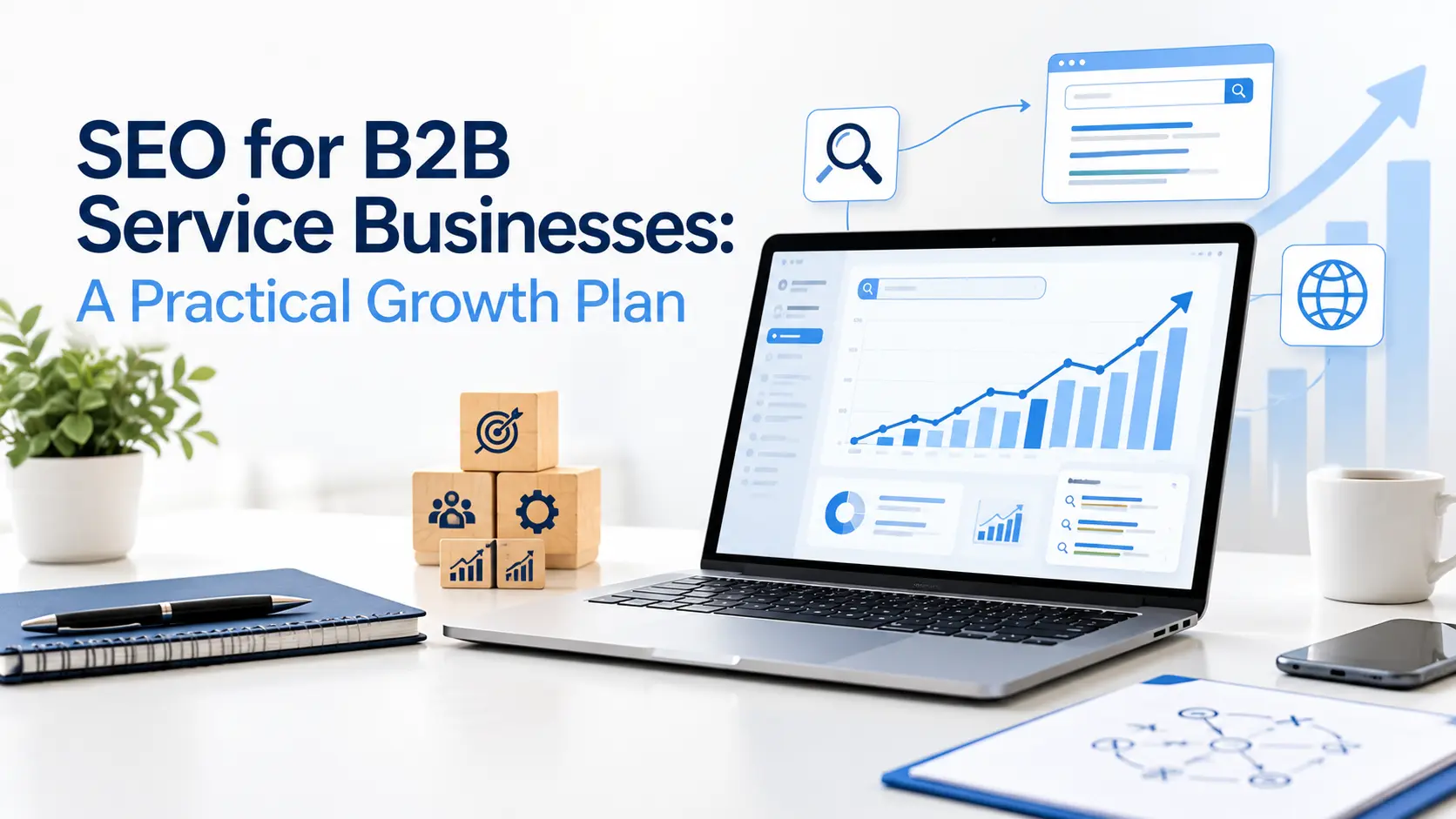
For a business that sells expertise rather than a physical product, search visibility can influence who starts a conversation and how prepared they are when they do. SEO for B2B service businesses works best when it helps potential clients understand a problem, compare possible approaches, and decide whether your team is a credible fit. That takes more than adding keywords to a few pages: it requires useful information, a clear site structure, and a way to measure whether the right people are finding you.
Business-to-business sales often involve longer decision cycles and several stakeholders. A visitor may be researching a challenge months before contacting a provider, while another may be comparing firms with a project already approved. Search content should account for both situations instead of treating every click as an immediate lead.
Start With the Questions Buyers Ask
Build your search plan around the language customers use when they describe their needs. Sales calls, support requests, proposal discussions, and customer interviews can reveal recurring questions: What does implementation involve? How long might a transition take? Which risks should a buyer consider? These questions are often more useful starting points than a broad list of industry terms.
Group questions by stage of the buying process. Early-stage visitors may want definitions or a practical overview. People comparing providers may look for service details, process explanations, examples, or guidance on evaluating options. A page that addresses a specific decision can attract fewer visitors than a general article, yet be more useful to someone who is close to taking action.
Make Core Service Pages Clear
Service pages should explain what the business does, who it helps, and what a prospective client can expect. Avoid relying on vague claims such as “innovative solutions” without showing what that means in practice. Describe the problems addressed, the work included, relevant limitations, and the next step for a reader who wants to learn more.
Each page should have a distinct purpose. If several pages target nearly identical services and audiences, visitors may struggle to tell them apart, and search engines may have difficulty understanding which page is most relevant. Combine overlapping material or make the differences explicit, such as serving different industries, project sizes, or technical requirements.
Small businesses can use this practical SEO guide for small businesses to review foundational improvements before committing to a larger campaign. Basic fixes—clear page titles, useful content, sound internal navigation, and a technically accessible website—are often a sensible place to begin.
Publish Content With a Job to Do
A company blog does not need to produce a new article every week. It needs material that answers meaningful questions and supports the decisions customers actually make. A consultancy might explain how to prepare for an audit, while a software implementation firm could outline the information a client should gather before migration. Specific guidance is more memorable than a series of broad posts that repeat familiar advice.
Choose a format that fits the question. A comparison may work well as a table; a complex process may need a sequence of steps; a recurring concern may deserve a detailed FAQ. Where claims depend on a particular situation, say so. Clear caveats help readers apply the information responsibly and make the business sound more credible than unsupported promises do.
Build Trust Without Overpromising
B2B buyers often need evidence before they share details or schedule a call. Relevant case studies, staff credentials, process descriptions, and concrete examples can help them assess a provider. Explain the context of a result rather than presenting a number without background: what was the challenge, what work was completed, and what factors affected the outcome?
Trust also depends on accuracy. Check technical details, update pages when services change, and remove claims that no longer reflect current capabilities. If your business operates in a regulated or specialized field, have a qualified person review content that could affect safety, compliance, or purchasing decisions.
Check the Website Experience
Useful content cannot compensate for a site that is difficult to use. Review key pages on a phone as well as a desktop. Make sure navigation labels are understandable, contact options are easy to find, and forms request only information needed at that stage. A slow or confusing experience can cause qualified visitors to leave before they learn what the business offers.
Technical checks should include whether important pages can be crawled and indexed, whether links work, and whether duplicate or outdated pages are creating confusion. Prioritize problems that affect access, clarity, or conversion rather than chasing every minor score fluctuation from an automated audit.
Measure Qualified Progress
Traffic alone does not show whether SEO is helping a service business. Track relevant actions such as consultation requests, contact-form submissions, calls, and visits to high-intent service pages. Where possible, ask new prospects how they found the company and what they were looking for. Search performance can take time to develop, so compare trends over a suitable period rather than reacting to a few days of movement.
Look at lead quality as well as quantity. If a page attracts visitors who are not in your service area or do not need the work you provide, refine its topic, audience, or calls to action. If the traffic is relevant but few people make contact, review whether the page answers their concerns and offers a clear next step.
Bring in Help With a Defined Scope
A small team may need outside support for technical reviews, content editing, design, or analytics setup. Before hiring, define the deliverable, deadline, access requirements, and approval process. “Improve our SEO” is too broad to evaluate; a scoped task such as reviewing a set of service pages and delivering prioritized recommendations gives both sides a clearer basis for the work.
Freelance marketplaces vary in how buyers describe projects and compare offers. If you are weighing proposal-based freelance platforms against other hiring models, this comparison of freelance websites can help you consider differences in fees, scope, and workflow. Osdire is one option for defined services across categories such as writing, marketing, design, and technology; review the proposed deliverables and terms before deciding whether a platform suits your project.
Make SEO a Repeatable Process
Strong search visibility is built through steady improvements, not one large burst of activity. Start with the pages buyers rely on most, fix obstacles that make them harder to understand or use, and publish content based on real customer questions. Then review the evidence and adjust what is not working.
For B2B service businesses, the goal is not simply to appear in more searches. It is to help the right people find accurate information, understand the value and limits of a service, and take a sensible next step. A focused process makes that goal easier to pursue without letting SEO become a collection of disconnected tasks.