
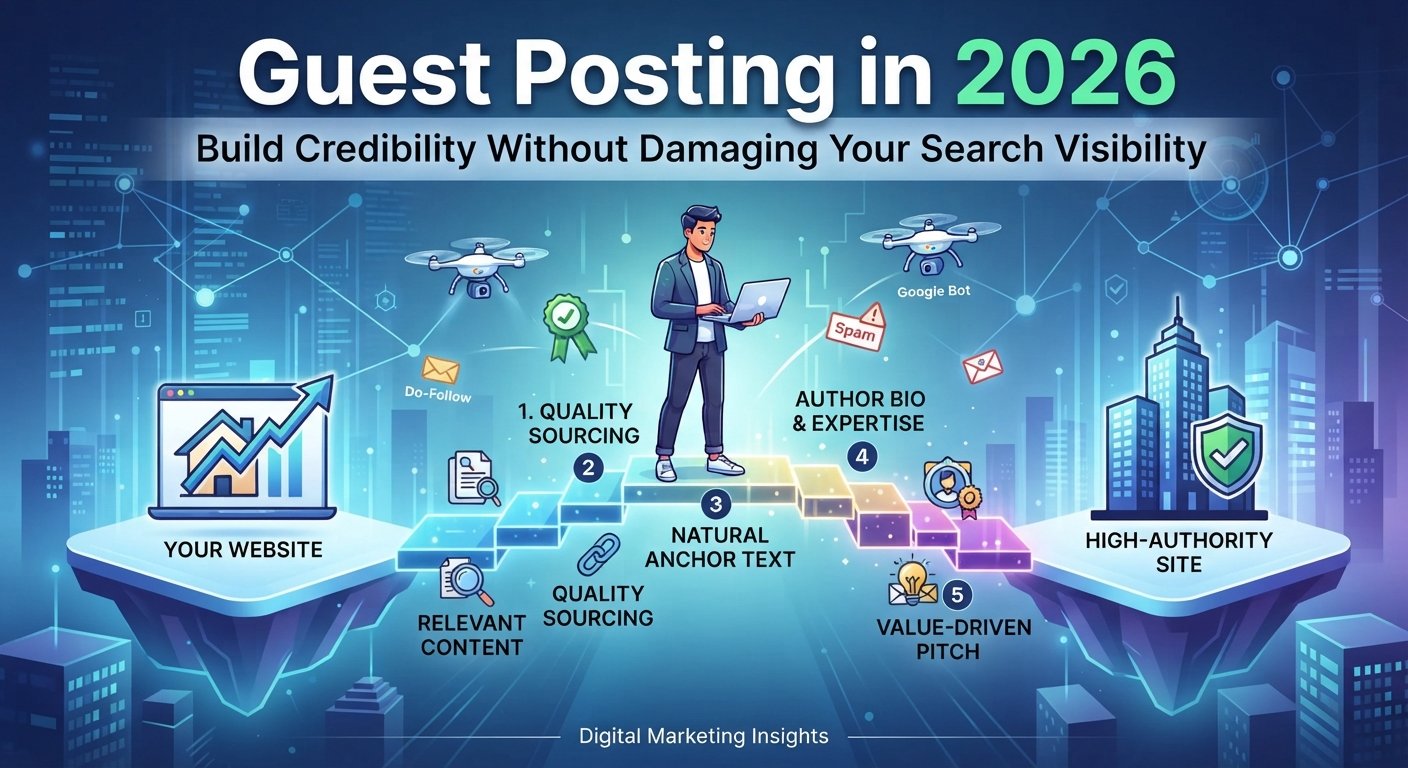
Guest posting still has a useful place in digital publishing, but the practice has changed significantly. A well-chosen contribution can introduce a specialist to a relevant audience, give readers a genuinely helpful resource, and build a meaningful connection between two publications. A poorly chosen placement, however, can create thin content, irrelevant links, and reputational problems that neither readers nor search engines appreciate.
The difference is rarely about the link alone. It comes down to editorial fit, content quality, transparency of purpose, and whether the article would be worth reading if search rankings did not exist. For website owners, marketers, freelancers, and startup teams, understanding those standards is more valuable than simply trying to publish on as many sites as possible.
Why Guest Posts Still Matter
Publishing on another website gives an author access to readers who may not otherwise discover their work. This is particularly useful in technology, where audiences often look for practical explanations before they trust a new tool, service, or viewpoint. An insightful article on password management, remote-work workflows, AI adoption, or website performance can establish expertise much more effectively than a short promotional mention.
Guest content also helps publications broaden their coverage. A general technology website may benefit from a contributor who has direct experience with accessibility testing, open-source software, data protection, or device repair. The host site gains a fresh perspective, while readers gain information that has a clear practical use.
Links can be part of this arrangement, but they should support the reader’s next step. A link to a detailed study, a product documentation page, or a useful guide is reasonable when it adds context. It becomes less useful when it appears unrelated to the topic or interrupts the article with sales language.
Start With Relevance, Not Domain Metrics
It is tempting to judge every publication by a single authority score, traffic estimate, or follower count. Those figures can help with early research, but they do not tell the entire story. A smaller website with active readers and a focused editorial identity may be a better fit than a large website that covers unrelated subjects.
Before pitching or arranging a placement, review several recent articles. Look for signs that the publication has real standards: clear authorship, organized categories, readable formatting, up-to-date information, and comments or social discussion that appear genuine. Check whether the site’s audience would plausibly care about your proposed subject.
- Audience alignment: The topic should fit the questions and interests readers already bring to the site.
- Editorial consistency: Your article should match the publication’s normal depth, tone, and formatting.
- Topical context: Links should lead to pages that expand on the specific subject being discussed.
- Content history: Avoid sites filled with repetitive, vague, or clearly automated articles.
What a Useful Guest Article Looks Like
Strong guest posts do not begin with a company description. They begin with a reader problem. For example, instead of writing broadly about the benefits of cloud storage, explain how to choose a provider for a small team handling sensitive files. Instead of announcing that AI can improve productivity, compare practical ways to verify outputs before using them in client work.
A clear structure makes the article easier to use. Start by defining the problem, introduce the factors that affect the decision, provide steps or examples, and close with realistic limitations. Specificity is essential. Readers should leave with an action they can take, such as enabling multi-factor authentication, auditing browser extensions, or documenting an internal workflow.
Use Evidence and Real Constraints
Technology advice becomes more trustworthy when it acknowledges trade-offs. A faster application may collect more data. A cheap hosting plan may impose support or performance limits. A new automation feature may save time initially while requiring careful review later. Discussing these constraints prevents an article from sounding like a sales page and gives readers a basis for making informed choices.
Where possible, distinguish facts from opinions. Link claims to primary documentation when available, identify the software version being discussed, and avoid promising results that cannot be guaranteed. These habits improve the article itself and reduce the chance that it becomes outdated immediately after publication.
How to Assess a Placement Opportunity
Some publishers manage contributions directly, while others use platforms that organize available placements. If you need a starting point for comparing publication options, a directory where you can buy guest posts can help identify sites by topic and publication details. It should still be treated as the beginning of due diligence, not a substitute for reading the publication.
Evaluate every option individually. Check whether the listed website is indexed, whether its recent posts receive signs of real readership, and whether its subject categories make sense. Read the rules carefully, especially requirements around originality, revisions, author biographies, link limits, and disclosure. A legitimate editor should be able to explain what type of content the publication accepts and why a proposed topic does or does not fit.
- List the audience you want to reach and the questions they need answered.
- Find publications with a genuine topical connection to those questions.
- Read recent posts to identify gaps your expertise can fill.
- Prepare an original outline rather than recycling an existing article.
- Use only contextual links that improve the reader’s understanding.
- Review the published post later to confirm that formatting, links, and factual details remain correct.
Common Mistakes to Avoid
The most common mistake is treating guest posting as a volume exercise. Publishing many shallow articles across unrelated websites may produce a temporary footprint, but it does not build recognition or trust. It also creates a maintenance problem: inaccurate or outdated claims remain attached to your name and brand long after publication.
Another weak approach is inserting the same anchor phrase repeatedly. Natural writing uses varied language, and a relevant link can often be introduced with a descriptive phrase instead of an exact commercial keyword. Overly optimized wording is distracting to readers and can make an otherwise informative article feel manufactured.
Finally, never rely on copied text, spun articles, or generic AI output that has not been carefully checked. Drafting tools can speed up research and organization, but the final work needs original insight, accurate claims, and a human editorial pass. Publishers and readers can recognize content that says a lot without offering anything concrete.
Build a Long-Term Publishing Strategy
The best guest-posting strategy is modest, selective, and useful. Choose fewer placements, contribute better work, and focus on topics where you can add knowledge rather than repeat what is already available. Track outcomes beyond rankings: referral visits, newsletter sign-ups, qualified inquiries, reader feedback, and invitations to contribute again are all stronger signs of success.
In 2026, credibility is built through consistency. A useful article on the right website can remain valuable for years when it answers a real question accurately. That is the standard worth aiming for: content that benefits the host publication, respects its readers, and remains defensible long after the initial post goes live.
For more helpful tips, ideas, and information, visit Techslassh.